
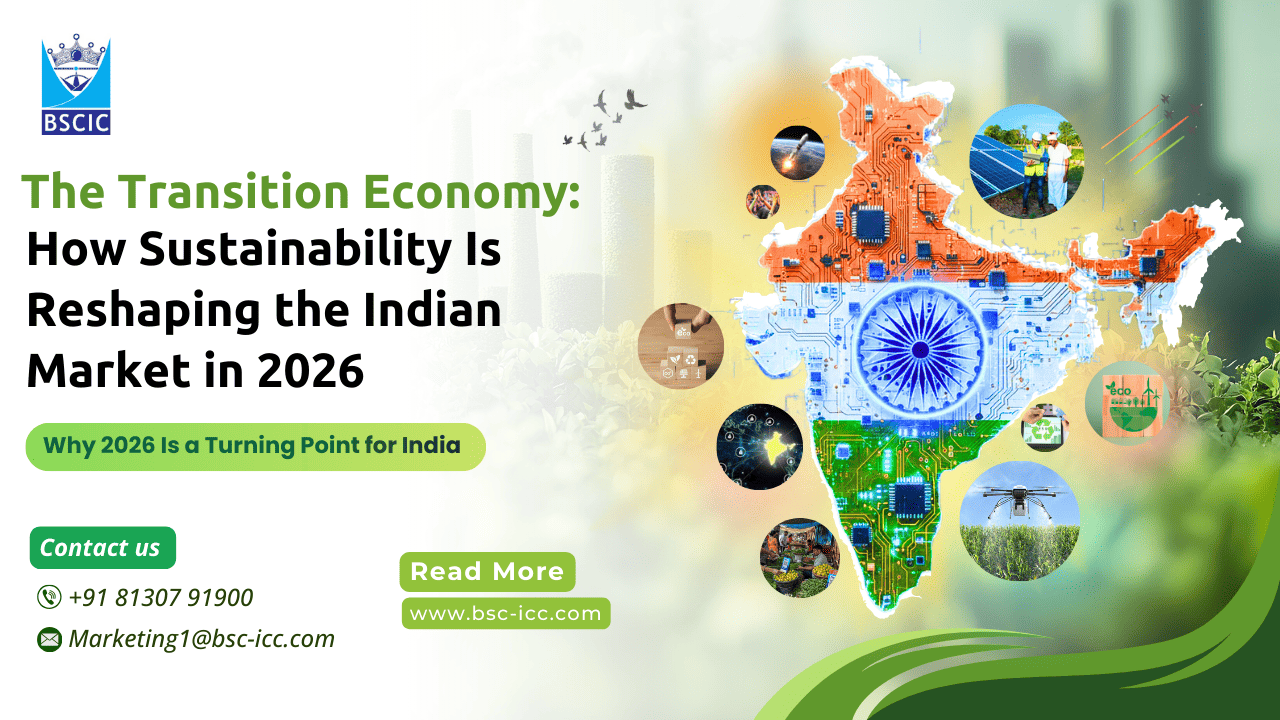
How Sustainability Is Reshaping the Indian Market in 2026
The Transition Economy: How Sustainability Is Reshaping the Indian Market in 2026
India’s economy is undergoing a fundamental shift. In 2026, sustainability is no longer a parallel agenda—it is becoming the backbone of economic growth, risk management, and long-term competitiveness. This shift is giving rise to what experts call the Transition Economy: an economy moving from traditional, resource-intensive models to low-carbon, responsible, and future-ready systems.
For Indian businesses, this transition is not optional. It is being driven by regulations, investor expectations, global supply chains, and a rapidly evolving consumer mindset.
What Is the Transition Economy?
The transition economy represents the phase where organizations actively move from “business as usual” to sustainable, resilient, and transparent operations. It is not just about environmental compliance—it integrates environmental, social, and governance (ESG) considerations into decision-making, strategy, and performance measurement.
In India, this transition is particularly significant due to:
- Rapid industrialization
- Expanding global trade exposure
- Climate vulnerability
- Strong policy push toward sustainability
Why 2026 Is a Turning Point for India
1. Stronger Regulatory Push
India has accelerated sustainability-linked regulations across sectors—covering energy efficiency, emissions reporting, waste management, and corporate disclosures. Frameworks like Business Responsibility and Sustainability Reporting (BRSR) are pushing companies to move beyond intent and demonstrate measurable action.
2. Global Supply Chain Pressure
Indian exporters are facing increasing sustainability requirements from global buyers, especially from Europe, Australia, and the Middle East. Carbon footprint disclosure, ethical sourcing, and third-party verification are now prerequisites for doing business internationally.
3. Investor & Financial Market Expectations
Investors are actively evaluating ESG performance alongside financial results. In 2026, access to capital is increasingly linked to sustainability maturity, governance strength, and verified compliance.
4. Changing Consumer Behavior
Indian consumers—especially younger demographics—are more aware, informed, and values-driven. Brands demonstrating transparency, responsibility, and sustainability are gaining long-term trust and loyalty.
How Sustainability Is Reshaping Indian Businesses
From Compliance to Strategy
Sustainability is no longer treated as a compliance cost. Progressive organizations are embedding it into:
- Business strategy
- Risk management
- Product innovation
- Brand positioning
Rise of Management System Standards
To manage sustainability effectively, Indian organizations are adopting internationally recognized management system standards related to:
- Quality
- Environment
- Occupational health & safety
- Energy management
- Information security
- ESG and climate-related governance
These frameworks help organizations move from fragmented initiatives to structured, auditable, and scalable systems.
Increased Focus on Verification & Assurance
Credibility matters. Stakeholders now expect independent certification and verification to ensure sustainability claims are accurate, transparent, and trustworthy.
Opportunities for Indian MSMEs
The transition economy is not limited to large corporations. In fact, MSMEs stand to benefit significantly by:
- Becoming preferred suppliers in global value chains
- Improving operational efficiency and cost savings
- Enhancing brand credibility
- Accessing new markets and partnerships
With the right guidance and certification, MSMEs can turn sustainability into a competitive advantage rather than a challenge.
The Road Ahead
India’s transition economy in 2026 is about balance—balancing growth with responsibility, profitability with purpose, and innovation with compliance. Organizations that act early, adopt structured systems, and demonstrate commitment through credible certification will be best positioned for long-term success.
Sustainability is no longer a future goal.
It is today’s business reality.
At BSCIC Certifications, we support organizations in navigating this transition through globally recognized certifications, audits, and training—helping businesses build trust, resilience, and sustainable growth.
