
ISO 9001:2026 Transition - The new ISO 9001:2026 Quality Management Systems standard was published on 16 September 2026. Following its publication, ISO 9001:2015 will remain applicable during the transition period and is scheduled to become obsolete on 30 September 2029.
BSCIC is currently preparing for the transition to ISO 9001:2026 in accordance with applicable accreditation requirements and will support certified organizations throughout the transition process within the prescribed timeline.
The revision of ISO 9001 introduces updated requirements aimed at further strengthening quality management, customer focus, organizational performance, operational effectiveness, risk-based thinking, and continual improvement.
For detailed information on the transition process, applicable requirements, and the timeline for completing the transition, please refer to QMS Transition Policy – Page 08. Click here
This Certification Service is Accredited by JASANZ
(Joint Accreditation System for Australia and New Zealand)
ISO 9001:2015(2026) provides a framework for organizations to implement a Quality Management System (QMS) that meets the needs of customers and other stakeholders. It is the most widely used international standard for Quality Management Systems (QMS) certification. With an ISO 9001:2015(2026) certification, organizations can demonstrate their commitment to quality and customer satisfaction, as well as gain access to new markets and customers
ISO 9001(2026) Certification, developed by the International Organization for Standardization, focuses on an organization’s Quality Management System’s strengthening, development, and continuation.
ISO 9001:2015(2026) is the latest version of the Quality Management System (QMS) certification. It establishes the standards for an organization to show its capacity to consistently offer products and services that fulfill the needs of customers as well as applicable legislative and regulatory requirements.
.webp)
Auditing Services: BSCIC’s Auditing services are the core product for ISO 9001 Certifications. The assessments can be against any scope of registration, provided they are within BSCIC scope of Accreditation. ISO 9001 users must also read ISO 9000.
BSCIC is accredited by NABCB (National Accreditation Board for Certification Bodies) and JASANZ (Joint Accreditation System for Australia and New Zealand)
ISO 9001:2015(2026) certification helps organizations improve their processes and products while ensuring that they are meeting customer needs. It also provides customers with assurance that they will receive consistent quality products or services from their suppliers.
Customer: Customers for this standard can be any organization in any sector, large or small, public or private. As the standard is completely generic in its structure and requirements, it is completely flexible. Company’s capacity to continuously meet and exceed customer expectations is demonstrated by ISO 9001 QMS certification.
The benefits of using the standards include:
The ISO 9001 standards give organizations an opportunity to increase value to their activities and to improve their performance continually, by focusing on their major processes. The standards place great emphasis on making quality management systems closer to the processes of organizations and on continual improvement. As a result, users are directed to achieve desired business results and outcomes, keeping in mind the satisfaction of customers and other interested parties.
- The connection of quality management systems to organizational processes
- The encouragement of a natural progression towards improved organizational performance, via:
- Use of the Quality Management Principles
- Adoption of a 'process approach'
- The connection of quality management systems to organizational processes
- Requirements for the establishment of measurable objectives at relevant functions and levels
- Being orientated toward 'continual improvement' and 'customer satisfaction', including the monitoring of information on 'customer satisfaction' as a measure of system performance
- Measurement of the quality management system, processes and product
- Consideration of statutory and regulatory requirements
- Attention to resource availability
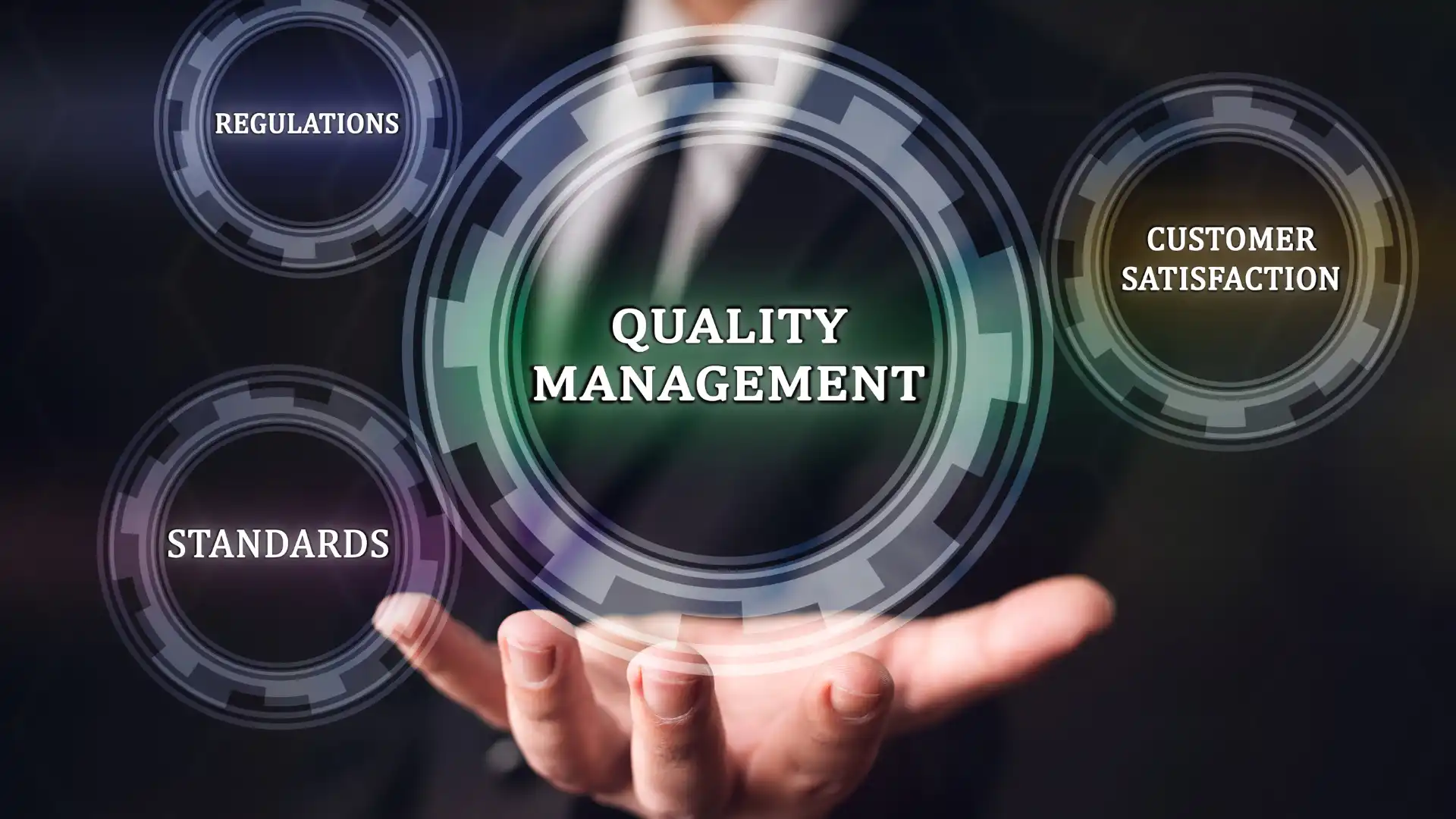
ISO 9001:2015(2026) Requirements Certification to an organization
This certificate is awarded to the Company for achieving ISO 9001:2015(2026) Certification, a globally recognized standard of Quality Management. This certification demonstrates the company’s commitment to providing high-quality products and services that meet customer requirements and expectations.
The ISO 9001:2015(2026) Standard requires organizations to demonstrate their ability to consistently provide products or services that meet customer needs while also meeting applicable statutory and regulatory requirements. The organization must have an effective system in place for monitoring performance, identifying areas of improvement, and taking corrective action when necessary.
Company has achieved this certification by implementing systems such as document control procedures, internal audits, continual improvement processes, risk assessment methods, training programs for employees on quality standards and practices; all designed with the goal of delivering superior service levels at every stage of product delivery.
By obtaining this certification Company has demonstrated its dedication towards excellence in quality assurance which will help them maintain competitive advantage over other companies in the industry who are not certified under ISO 9001:2015(2026) standards. We congratulate the Company on their achievement!
Understand, how ISO 9001:2015(2026) QMS Certification Maximizing Customer Satisfaction and Business Performance
- Better alignment with regulatory and legal requirements.
- Improved customer satisfaction by consistently meeting customer requirements and expectations.
- Enhanced credibility and reputation in the market, leading to increased business opportunities.
- Increased efficiency and productivity by streamlining processes and reducing waste.
- Reduced costs by identifying and addressing inefficiencies and non-conformities.
- Overall, achieving ISO 9001:2015(2026) QMS certification can lead to significant benefits for organizations of all sizes and industries.
- Why ISO 9001:2015(2026) Certification is a Must-Have for Organizations in Today's Market.
- There are several reasons why an organization might need ISO 9001:2015(2026) Quality Management Systems (QMS) certification:
.webp)
Customer requirements:
- Many customers require their suppliers to be certified to ISO 9001 as a condition of doing business. ISO 9001 certification can be a competitive advantage when bidding for contracts and can open new business opportunities.
- Increased efficiency and productivity through process simplification and waste reduction.
- Improved risk management: ISO 9001 requires organizations to identify and manage risks in their processes, which can aid in the prevention of quality issues and the reduction of costly errors.
- Compliance: ISO 9001 is an internationally recognized standard for quality management systems. Achieving certification demonstrates compliance with the standard and can help organizations meet regulatory and legal requirements.
We value your Potential Queries
Why do I need ISO 9001 management systems?
- All organizations have some form of management system or they would not be in business for long.
- ISO 9001 provides a framework through which organizations can establish a system of controls to manage the threat and risks to their businesses.
- ISO 9001 systems force you to look at the way in which you operate by using the process approach, which should be introduced throughout the organization from the CEO to the cleaner.
- The systems introduced will provide the leadership with valuable feedback on how well their organization is operating, through providing factual evidence of performance. This can then be acted upon to provide improvement.

How much will it cost me? Will I get my investment back (ROI)
The systems introduced will provide the leadership with valuable feedback on how well their organization is operating, through providing factual evidence of performance. This can then be acted upon to provide improvement.
There could also be IT costs as the most effective systems are those that are IT based.
Certification / registration costs will depend on the size and complexity of the organization.
If the organization works to the spirit of the standard, then there is a good chance that the return on the investment will be met.
Government driven Incentives covers the cost of the Certification for the Small Scale Sector
ISO 9001:2026 Transition
BSCIC is committed to supporting its clients in the transition from ISO 9001:2015 to ISO 9001:2026.
BSCIC is committed to supporting its clients in the transition from ISO 9001:2015 to ISO 9001:2026. A three-year transition period will apply, and ISO 9001:2015 certificates issued by BSCIC will not remain valid beyond 30 September 2029. Organizations intending to maintain certification are required to complete the transition within the prescribed period.
Early preparation is recommended to understand the revised requirements, identify necessary changes, and ensure a smooth and timely transition.
Benefits of ISO 9001:2026
- Stronger Leadership & Quality Culture – Reinforces leadership commitment, quality culture, and ethical behaviour.
- Greater Focus on Risks & Opportunities – Provides clearer emphasis on managing risks and pursuing opportunities.
- Enhanced Strategic Alignment – Strengthens the connection between quality objectives, organizational context, and business direction.
- Climate Change Consideration – Requires consideration of relevant climate-related issues affecting the QMS. (This builds on the 2024 climate-action amendment.)
- Improved Customer & Stakeholder Focus – Supports better understanding and fulfilment of customer and relevant stakeholder requirements.
- Greater Operational Effectiveness – Helps organizations improve process performance, consistency, and decision-making.
- Emphasis on People & Awareness – Strengthens awareness of quality culture and individual contribution to QMS effectiveness.
- Continual Improvement & Resilience – Supports organizations in adapting to change and continually improving QMS performance.
How BSCIC Supports Your Transition
BSCIC provides clear guidance, awareness, and transition-related support to assist its certified clients in understanding and preparing for the revised ISO 9001 requirements.
- Provides relevant transition guidance and key information.
- Supports awareness and understanding of the revised ISO 9001 requirements.
- Encourages structured transition planning and timely preparation.
- Helps organizations understand areas of their QMS that may require review.
- Keeps clients informed of applicable transition requirements and timelines.
- Conducts transition activities in accordance with applicable accreditation and certification requirements.
BSCIC is committed to making the transition to ISO 9001:2026 structured, transparent, and manageable for its clients.